Showing posts with label Top soil management. Show all posts

Friday, 11 November 2011

Regenerative Agriculture & Holistic Grazing Management


What has Regenerative Agriculture got to do with UK pasture based dairy farmers?
I think regenerative agricultural technologies have a lot to offer experienced pasture farmers who understand grazing management principles. I liken it to the best chefs who after having a classical training can go on and create the most amazing dishes. The same with classically trained singers & musicians, once they have mastered their craft they can go on to produce the most imaginative & creative music. So it is with grazing, soil, & water management….first you master the classical training then you use those skills to be creative. In this case it is to create topsoil & to control water & water flows on your farm. 
Regenerative agriculture is an opportunity to move beyond sustainability to become regenerative & to rebuild the biological capital on your farm. During the industrial agricultural revolution food production yields have raised, efficiency of yields has improved but at what cost to the environment & soil in particular soil carbon. Holistic grazing involves mixed pastures with many deep rooting species being grazed at much higher pasture covers. The concept is to feed both the cattle & the soil. 
So Who Are the Movers & Shakers?
In this new approach several American names stand out as leaders….Allan Savory, http://en.wikipedia.org/wiki/Allan_Savory
 http://www.holisticmanagement.org/    Gary Zimmer, Abe Collins & ofcourse the very well known Joel Salatin. http://www.polyfacefarms.com/
Many YouTube clips give a very good idea of how Joel Salatin’s grazing operates & how he thinks.
Joel has become a writer of many best selling books with intriguing titles like “The Sheer Ecstasy of being a Lunatic Farmer”. How could you resist a book like that?

However its not really that new…..nothing is, is it? And it’s closer than I ever imagined. A Pasture to Profit Discussion group member on the Cotswolds is a direct descendant of the Scottish landowner Robert H Elliot, 1898, who created & wrote about his system of farming that involved laying down land to grass, using deep rooting pasture species & grazing cattle to rebuild the topsoil, to better use water & to increase the biodiversity.
http://en.wikipedia.org/wiki/Robert_Henry_Elliot    Robert H Elliot’s book “The Clifton Park System of Farming” sets out his key principles.
In Australia, P A Yeomans during the 1930s developed a system of on farm water flow management & regeneration way before his time with a concept called “Keyline management” http://en.wikipedia.org/wiki/P._A._Yeomans
Keyline systems are designed to move water about a farm landscape to get the maximum about of pasture growth. It’s an incredibly clever concept that is amazingly simply but highly effective. The key objective is to control water flow across your farm. The core essence is to enhance the agricultural landscape with trees & pasture being grazed by cattle.
What is central to all of the above agricultural innovators & their systems for enhancing the environment & rebuilding topsoil is that the grazing of pasture with cattle. Many current day environmentalists/climate warming spokespersons quite wrongly think cows & cattle are a problem to the environment NOT the solution.
This is fascinating stuff & quite challenging to much of what is practiced on low input pasture farms…..that’s why you are the most qualified to take up & implement either all of or most of the principles of holistic grazing management. If you are a non believer that’s fine “I’ve never learnt anything from someone who always agrees with me”.
If I have reservations myself it relates to how this thinking can be exploited in high rainfall areas……..as it is being most successful in dry or even arid environments. The principles are however very important & universal. Several P2P group members are already experimenting & as with all pioneers (they are the guys with arrows in their backs in case you dont know how to spot them!)  it's not plane sailing but at least they are "having a go Mate!" which is fantastic for all of us. We need to focus on increasing soil carbon.
RegenAG are running courses in the UK with Darren Doherty from Australia & during 2012 there will be holistic grazing management workshops & Joel Salatin is coming over to run a 2 day workshop in either Nov or Dec 2012. You will need to register your interest now for that course.
This will be my last UK based blog for three years as I’m returning to NZ to take up a University post with the new “Centre of Excellence in Farm Business Management ” at Massey University. So the next blog will come from Palmerston North, NZ.
Current UK Pasture Measurements
TheAverage Pasture Cover (kgsDM/ha) & Pasture Growth (kgsDM/ha/day)
North Wales, AFC 2111, growth 20 still VG grazing conditions
Shropshire, 1850, growth 30, cover increasing
Shropshire, 2000, 45 day round, 40% dried off
Herefordshire, 2150, gr 18, de 20, soil temps 12, Now OAD pulling plug on 22nd Nov.
Herefordshire, 2219, gr 22, de 16, cows in by night, grazed 65% of farm since 1st Oct.
Dorset, AFC 2003, growth 20
Devon, AFC 2400, growth 30
East Sussex Cows in, pasture still growing in mild temps, Could be a good early turnout Jan/Feb in South East.
Cornwall, AFC 2480, gr 36, de 39, Awesome year!!!
Northern Germany, AFC 1925, growth 7, last 10 days grazing its been a very decent year!
My thoughts are with our friends in the Breton Group in France as Odile is going thru a rough patch. Our best wishes are with Alain & Odile, who are amazing people & wonderful friends!

Saturday, 4 June 2011

"The Nation That Destroys It's Soils Destroys Itself" Roosevelt 1937

2.2 Million Tonnes of top soil are lost each year from UK agricultural soils.PASTURE FARMING HAS THE ANSWER. President Roosevelt 1937 made his statement about soils after the 1930s & the Mid West Dust Bowl, but have we learnt the lesson....Topsoil loss is a serious issue in the UK TODAY.
http://www.guardian.co.uk/environment/2009/sep/24/topsoil-farming-defra
The Governments response (now archived by Defra) was a Soil Strategy Plan http://archive.defra.gov.uk/environment/quality/land/soil/documents/soil-strategy.pdf
http://www.guardian.co.uk/environment/2009/sep/24/topsoil-farming-defra
The key issues identified in the degradation of UK soils are topsoil loss, compaction & the loss of Soil Organic Matter. Under good dairy pastures & sound grazing management is usually a healthy soil environment. Permanent pastures encourage build ups of Soil Organic Matter & healthy soil life. However all that happens on UK low input dairy farms does not favour a healthy soil. E.g. excessive use of Nitrogen, poor drainage, poor use of manures or cultivation/ploughing.
In this new carbon environment we need to change our ways.” We cannot solve our problems with the same thinking we used when we created them.” Albert Einstein.
http://www.telegraph.co.uk/earth/agriculture/farming/6828878/Britain-facing-food-crisis-as-worlds-soil-vanishes-in-60-years.html During & post WW2, Winston Churchill ordered as much of the UK that could be ploughed should be so that arable crops could be grown to feed the nation. The response & the efforts of farmers fed the nation, the right call at the time. Ploughing & cultivation however increases the potential loss of topsoil & destroys the soil structure & certainly speeds up the loss of soil organic matter. These are serious issues to be addressed by the arable industries but pasture farmers need to take heed too.
http://archive.defra.gov.uk/environment/quality/land/soil/documents/soil-strategy.pdf
One aspect of soil management the pasture based dairy farmers can modify is cultivation & ploughing. With increasingly intensive farming there has been a tendency for topsoil structure to weaken as organic matter is used up and not returned to the soil. Weakly aggregated soils disintegrate under the influence of heavy rainfall and soil particles become mobilised. In recent years cultivation has been extended more and more to sloping fields. The combination of weakly structured soils and sloping fields provide ideal conditions for soil runoff.
http://www.soil-net.com/dev/page.cfm?pageid=about&loginas=anon_about
The loss of precious Soil Organic Matter is likely to be more serious. When soils are cultivated they are exposed to the air & the oxidization of SOM increases. The dry soil surface & lack of plant cover makes this worse. We have to find ways of direct drilling pastures & winter crops so we can leave the soil intact. In Australia some innovators have developed the concept of “Pasture Cropping” for wheat. Have a look at these YouTube videos http://www.youtube.com/watch?v=khNprFGW0N8&feature=related
How can we in the UK adapt to ideas of young Darren Doherty out in Victoria, Australia? http://regenag.com/web/about-us.html
We need to STOP PLOUGHING MR CHURCHILL. We have direct drilling technology (not new) & we can subsoil to deal effectively with compaction.
Properties of healthy soils
We need to see ourselves as CARBON FARMERS everything we do should consider the impact on carbon. Soil health is a relatively new concept because we have tended to do soil tests only to measure the available minerals for plant nutrition. We still have a situation in the UK where few “Standard Pasture” soil tests include Soil Organic Matter %. Why?
Soil characteristics that contribute to a healthy soil include
• protected soil surface and low erosion rates
• high soil organic matter
• high biological activity and biological diversity
• high available moisture storage capacity
• favourable soil pH
• deep root zone
• balanced stores of available nutrients
• resilient and stable soil structure
• adequate internal drainage
• favourable soil strength and aeration
• favourable soil temperature
• low levels of soil born pathogens
• low levels of toxic substances.
http://www.dpi.nsw.gov.au/__data/assets/pdf_file/0010/166897/soil-health-proceedings-2001.pdf
Direct drilling of winter crops does work we need to work on the technologies & timings to be successful. See the winter crop below that was successfully direct drilled (actually into very dry soils). Why is SOIL ORGANIC MATTER % tests NOT part of the standard soil test in the UK?
A very good question WHY NOT? If you are getting a pasture soil test done PLEASE INSIST that the Soil Organic Matter % is included…..Start monitoring SOM%
.
Current UK Pasture Measurements

A mixed bag this week as some areas have responded to recent rain while others have not. Growth in Scotland looks very good as does North Wales & Lincolnshire but southern areas struggling. Several indications of pasture quality slipping with the onset of ryegrass heading. Several NZ varieties of ryegrass which are classified as late heading in NZ become mid range heading in UK.
The weekly task of texting me the current pasture information has brought out the comedians....thanks guys for your weekly help. Please text me your humour & your pasture data.
TheAverage Pasture Cover (kgsDM/ha) & Pasture Growth (kgsDM/ha/day)

South Ayrshire, AFC 2524, Growth 93 soil temp 15degrees C
Dumfries, 2105, Gr 63, Demand 49, rain on & off, wet knees when measuring pasture (only kidding!)
Nth Wales, 2076, gr66 still dry despite rain OAD doing very well
Shropshire organic, 1892, gr 19, no rain, too hard to dig spear thistles
Shropshire, 2000, gr 8
East Staffordshire, 1900, gr 37
Lincolnshire, growth up to 96kgs compared to 40 last week, good rain & warmth.
Herefordshire org, 2263, gr44, demand 48, pastures heading
Gloucestershire, 2115, gr 47, difficult to text as mid rain dance!
Somerset org, 1850, gr 27, de 36, rain needed
Pembrokeshire, 2108, gr59, premowing silage ground
Pembrokeshire, 1932, gr 50 just cut silage
Devon, 2250, gr 45, grazing silage & feeding silage
Cornwall, 2030, gr 43 feeding 5kgsdm silage, rain please
South Kilkenny, Ireland, 1981, gr50, demand 46
Winton, South Island NZ, AFC 1900, growth 20kgs, outwintering on foddercrops

Saturday, 14 May 2011

"Preparer Les Terrains de L'Avenir"...Prepare the Earth for the Future

“Preparer Les Terrains de L’Avenir”. My French friends will be amazed with my command of the french language but this is a very appropriate title for this week's blog.
“Prepare the earth for the future” is the core element of a Sustainable Farming system.


My very good friends Erwan & Laurence Le Roux, who farm in Brittany, France have recently won the “Trophee de l’agriculture durable 2011” award for the most sustainable farm in France. This is a most prestigious award & I am absolutely thrilled that these innovative & forward thinking pasture based dairy farmers have won.


You can read (using Google translate) & view a video......

http://agriculture.gouv.fr/bien-vivre-en-production-laitiere
& photos of the Le Roux family & their farm this spring http://photo.agriculture.gouv.fr/galeries/TAD2011_Leroux/


The UK is somewhat behind France in encouraging “Sustainable Farming” practices & to their credit the EU Integrated Farming Initiative or EISA have thought this issue thru very well
http://www.sustainable-agriculture.org/stuff/EISA-Framework-english-040810.pdf
If you search the internet you do find other countries & organisations now working toward more sustainable farming practises, all taking a slightly different approach.
http://www.soilassociation.org/Whyorganic/Climatefriendlyfoodandfarming/Strategiesforchange/tabid/565/Default.aspx http://www.icrofs.org/ http://www.sluri.org.nz/

I think we need to interpret the EU’s EISA framework & work toward our pasture based dairy farms becoming recognised as being sustainable farm businesses using many of the benchmarking tools already developed.
The 8 main points of Sustainable Farming are:-
To have a profitable farm business not dependant on subsidies.
To manage soils for the future with less dependence on fertilizers & to build Soil Organic Matter (SOM) so increase soil carbon storage.
To reduce Energy consumption by reducing demand & generating on farm energy. To lower the Carbon Footprint of milk.
To better manage Water (conserve & reduce use), reduce pollutant losses.
To improve Dairy cow welfare, fertility & animal health.
To have a sustainable people practices.
To increase the bio diversity on the farm.
To develop long term business communication strategies not only with buyers, but with the professional support teams & the local community.
“Prepare the earth for the future” (Point 2) I think we need to rethink how we manage soils with our pasture based dairy farms. I don’t know of a single farm in the UK that has shown me a detailed soil map of the farm.
In NZ we met Shane Carroll & Nicola Shadbolt who farm in the Pohangina Valley near Palmerston North.

Shane had a very clear long term environmental plan to improve the sustainability of their farm business based on having a soil capability map. This was in our view the most forward thinking "Sustainable Farming" management practice we saw in NZ. There are many aspects of soil capability that need to be considered. However some soils are dry free draining while others are wet with poor drainage & maybe even subject to erosion. These soils should not be managed the same way especially if our goal is to increase the SOM & carbon stored within the soil.
In the UK some soils are perfect for ryegrass & white clover but others are not. Dry soils may well be better off in herbal pastures ie Chicory + clover or Plantain + White Clover without grasses. We need to move away from thinking that ryegrass/clover is our only option especially on dry soils. It may not be our best option to increase soil organic matter (SOM) either so we need to start looking outside the box.


Strawberry Clover is better suited to wet Soils


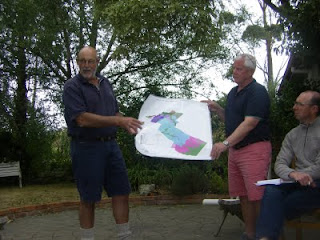
You need to start with a Farm Soil Map indicating the different soil capabilities. then develop a plan using a different approach.


Talk to me about Sustainable Farming.


Current UK Pasture Measurements


Welcome Rain in most areas 20-40mm, immediate increase in growth. However soils are still very dry & many farms have not harvested any surplus spring growth. Grazing rotations still long 30-40 days.


Average Pasture Cover (kgsDM/ha) & Pasture Growth (kgsDM/ha/day)


South Ayrshire AFC 2155, growth 62, demand 56kgs/ha/day


Dumfries, 2194, 66 growth, demand 57, cutting silage bales


Shropshire, 2300, 60 some rain this week


East Staffordshire, 1970, 39 approx 20mm rain now some growth 60-70


Hereford organic, 2114, 48, rain 46mm growth up 10kgs/day since rain


Hereford 2100, 70 growth, demand 65


Gloucestershire, 2160, 62, 22mm rain on Saturday


Gloucestershire, 2180, 85 growth

West Somerset, 2100, 50, 33mm rain but drying out again


Cornwall, 2300, 105, 32mm rain, record production STD,AI 80% in 1st 17days


Cornwall, 2398, 118


South Kilkenny, Ireland, 2075, growth 71, demand 66


Members of Wyegraze Discussion Group are all linked into Agrinet to very effectively share pasture information.....Every group should be doing this as it will help all groups https://www.agrinet.ie/Default.aspx

Wednesday, 17 November 2010

What's Happening in the UK is So Wrong

European & UK Agricultural policy regarding food production should concern everyone with a global view of future world food security. The UK & much of Europe has the soils & a very favourable climate for food production yet government policy seems to be driving food production down & driving farmers out. In a world with a rapidly increasing population & a world increasingly being affected by global warming this makes NO sense whatsoever. More than a third of the world has arid or semi arid climates where it is impossible to grow food. Water is becoming a very scarce resource. Food Production needs water, agriculture needs water.
The UK is so lucky in a world struggling for fresh water, but do we appreciate how lucky we really are?
Countries blessed with adequate water to produce high quality healthy food like grass fed milk have a moral obligation I believe to encourage not discourage farming.

What’s happening in the UK (with a near perfect climate for grass fed food production)is so wrong!
I’ve recently been lucky enough to drive thru parts of Utah, Arizona, Nevada & California all mostly arid states of the USA, Apart from the extraordinary beauty of the National Parks, surely some of the most amazing scenery in the world. Much of this arid land is unsuitable for food production without risking the fragile environment.
It was the drive down part of the “Historic Route 66” Highway in Arizona that set the brain thinking on a global scale for the future of agriculture & food production. The “Historic Route 66” has a fascinating history dating back to the 1920s when it became the first roadway from Chicago to Los Angeles …the first highway to cross the USA.

http://en.wikipedia.org/wiki/U.S._Route_66 Route 66 was completed in 1927 to great acclaim but it became even more famous after John Steinbeck wrote “The Grapes of Wrath” which was a story related to the Dust Bowl of the 1930’s. He referred to Route 66 as the “Mother Road” in his book. The Dust Bowl resulted from over cropping of what had been native grassland with fragile soils without a clear understanding of crop rotations & top soil management.

“The health of the nation is dependent upon the health of the soil”

It’s a fascinating story & the history leaves us with an important agricultural lesson especially regarding top soil & soil organic matter protection.
http://en.wikipedia.org/wiki/Dust_Bowl
One of the tragic consequences of the Dust Bowl was that 2.5 million people mainly farmers & farm workers were left destitute, their farms & livelihoods ruined. Thousands of these people migrated west to California along Route 66 looking for a new life (this was the years of the Great Depression remember). The Historic Route 66 was popularised during the 1950s & 1960s with well known songs.
Today I found the Route 66 very interesting (it no longer survives as a full highway) but rather depressing. As we drove along this famous road in Arizona we saw sad & depressing signs of rural hardship & depression. The small landowners are struggling to survive the harsh climate & current recession. The most common advert on the local radio stations was lawyers advertising their bankruptcy services. This seemed a sad reflection of tough times in many parts of rural USA today.
http://www.knpr.org/index.cfm
The arid environment of these western states of the USA also highlights the extreme importance of fresh water, not only to agriculture which in California is totally dependant on this scarce resource but many humans are also reliant on bottled water. Many of the water dams storing water were disturbingly low. http://en.wikipedia.org/wiki/List_of_reservoirs_and_dams_in_California
http://waterdata.usgs.gov/ca/nwis/rt
The availability of water for food production can not be over stated & this is bluntly obvious when you visit arid areas where water is a scarce resource.
In Britain we simply dont appreciate the rain nor ......"the green & pleasant land"

It was said by Chief Seattle more than 150 years ago, but is still incredibly poignant today:
"Teach your children what we have taught ours that the earth is our mother. Whatever befalls the earth befalls the sons of the earth. The earth does not belong to man; man belongs to the earth. Man did not weave the web of life; he is merely a strand in it. We do not inherit the earth from our ancestors; we borrow it from our children." A Native American Proverb.